The quiet room is not automatically a tragedy.
The transcript opens with a man in his 50s sitting in a quiet house at night. A channel plays in the background. Nobody is asking for him. Nobody is interrupting him. At first glance, it could look like loneliness. But the deeper point is more precise: for many Gen X men, quiet was not a late-life accident. It was an early-life training environment.
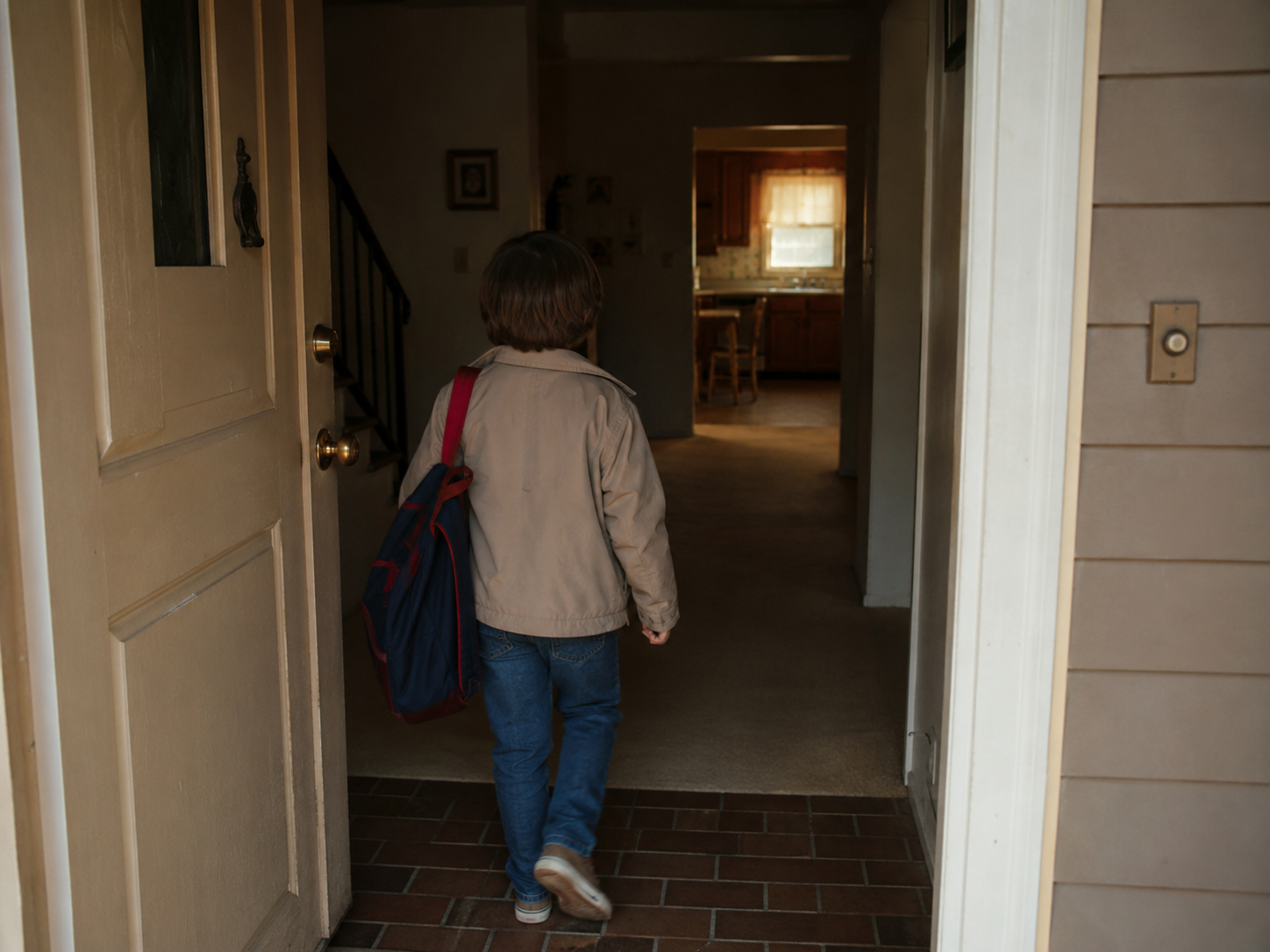
These men were often the children who came home, unlocked the door, made food, managed homework, and solved small crises without ceremony. The adult world did not always pause to ask how they were doing. So they learned to keep going. Decades later, the same capacity can look like calm mastery from one angle and emotional under-reporting from another.
Independence became a personality before it became a philosophy.
The video frames Gen X as a generation trained in practical autonomy. Reduced supervision can sharpen problem-solving, tolerance for ambiguity, and the ability to sit quietly without panic. In adulthood, that can become a real asset. A man who says he likes living alone may not be pretending. He may be reporting a skill he has practiced since childhood.
But a skill can harden into identity. When emotional self-sufficiency becomes the default language of the self, a person may stop noticing the difference between not needing anyone and having become very good at not asking.
These numbers are context, not destiny. They help frame a social shift; they do not describe every man, every culture, or every household.
The apartment may look the same. The inner story may not.
One of the strongest insights in the transcript is that the outside image can mislead. Same age, same quiet evenings, same dinner for one — but three very different routes can lead there.
The man who never married
This life may not be protest or wound. It may simply be a life that kept organizing around work, private rhythm, personal order, and self-chosen routines. Over time, the one-person system becomes highly optimized. Partnership then starts to feel less like an upgrade and more like a full operating-system migration.
The man whose marriage ended
Divorce can remove more than a spouse. It can remove the social calendar, the birthday reminders, the couple-friends, the household rhythm, and the emotional translator. The loss is not only romantic. It is infrastructural.
The widower
Widowhood is another category. The house may still carry two-person memory. There may be no anger to process, no negotiation to revisit, only absence. In that case, the work is not learning solitude from scratch; it is learning how to live inside a space that used to mean something else.
From the inside, the day may feel functional — even satisfying.
A solo day can have a clean internal logic. Wake early. Make coffee exactly right. Work, repair, read, research, tinker, watch, eat when hungry, sleep when the system permits. Nobody is negotiating the schedule. Nobody is asking why the same mug, the same chair, the same documentary, the same workshop habit matters.
The evening often divides into two modes. In one, the room carries a signal: sport, news, podcast, old film, machine noise, fishing channel, YouTube rabbit hole. In the other, silence itself is the companion: a window, a thought, an old memory, twenty minutes of nothing that is not empty.
The background hum helps the mind stay regulated. It is not always avoidance. Sometimes it is a chosen frequency.
Silence can be a room where the self stops performing. Some men are not frightened by it; they were trained in it.
No one to answer to. No one to account for him. Freedom on good days; risk on narrowing days.
The wire may not be broken. It may simply be inactive.
The transcript’s phrase for many men’s friendships is useful: high passion, low vulnerability. Men can talk for hours about sport, engines, politics, music, repairs, money, or news. But the sentence “I have not been doing well lately” may not come out naturally. Not because nothing is felt. Because the speech-path was never installed properly.
A lot of male friendship runs shoulder-to-shoulder. Fixing something. Driving somewhere. Sitting at a match. Sharing a task. The conversation happens around the activity, not under a spotlight. When the activity disappears and distance grows, the friendship does not formally end. It becomes like a tool in the garage: still owned, still valued, rarely used.
Solo living can be a real form of order, dignity, and contentment.
It is important not to flatten the story into pity. A self-built life can be stable and deeply satisfying. A man may enjoy his food, tools, music, accounts, books, machines, morning light, private habits, and the absence of constant negotiation. On some Saturdays, the life he has is exactly the life he would choose.
This matters because compassion becomes inaccurate when it assumes that every solitary person is secretly waiting to be rescued. Some are not. Some are well-rooted. Some have built a life that runs on internal fuel, and it runs clean.
The question is not “Is living alone bad?” The question is “Does the structure still keep the person alive, mobile, socially reachable, and meaningfully engaged?”
The danger is not always loneliness. Sometimes it is drift.
Drift is what happens when a life has no external reflector. No one says the meals have become careless. No one notices the gym disappeared. No one catches that sleep has shifted. No one says, “This does not seem like you.” The normal moves slowly, and because it moves slowly, the movement feels normal.
In a fully self-managed life, the world can become smaller without any dramatic collapse. Less variety. Less physical movement. Fewer calls. Fewer errands that require presence. Fewer reasons to dress properly. Fewer people who expect him somewhere. The life still functions, but its radius contracts.
Small, regular contact beats big, occasional repair.
The transcript points toward low-friction systems. Not grand reinvention. Not sudden emotional exposure. Not becoming a different kind of person overnight. The better path is almost mechanical: a few small anchors that happen whether motivation appears or not.
- One weekly signal: send a voice note, a two-minute video, or a simple text to one person every week.
- One outside routine: a walk, tea stall, temple, gym, workshop, library, market, group ride, or class — same day, same time.
- One shoulder-to-shoulder activity: repair something with someone, ride somewhere, help with a task, visit a farm, watch a game.
- One structure review: once a month, check sleep, movement, food, money, calls, medical appointments, and meaningful work.
- One old wire reactivated: call the friend from three years ago without making it dramatic. No heavy speech required.
The point is not to become socially busy. The point is to keep the line alive. A wire does not need constant electricity, but it should not be forgotten so long that nobody remembers where it leads.
Image placeholders with generation-ready captions.
Replace these visual rooms later with generated images. The captions are written as prompts so the page can evolve without rewriting the structure.
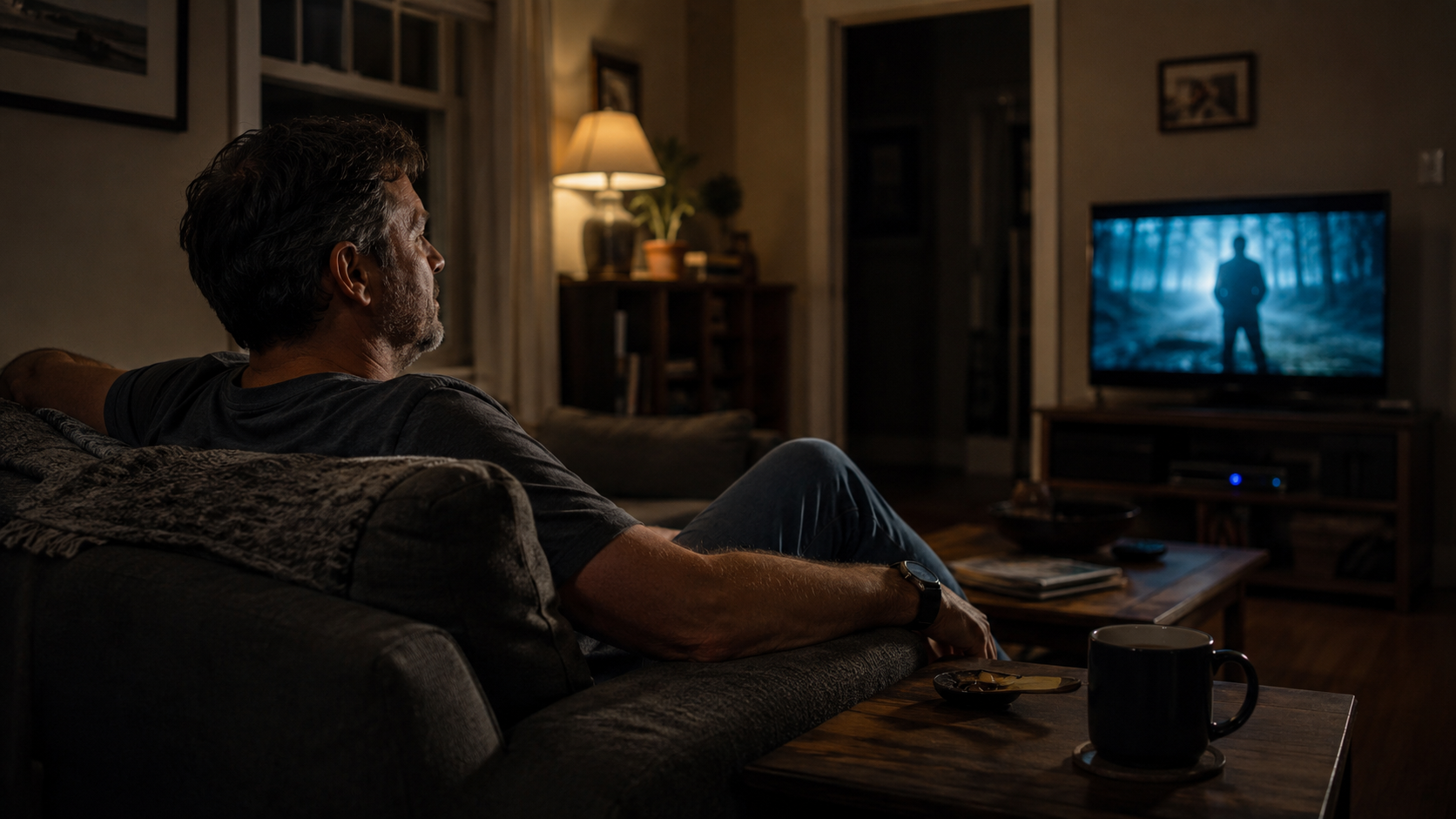
A cinematic but realistic quiet living room at 10 p.m., a middle-aged Gen X man seated alone, soft television glow in the background, cup of coffee on side table, calm not tragic, warm shadows, documentary realism, no text.
Three adjacent apartment doors in a quiet hallway, each door subtly representing a different life path: never married, divorced, widowed; no literal labels, understated symbolic details, warm neutral palette, editorial illustration style.
A minimal symbolic image of a tidy room slowly narrowing into a smaller circle of light, calendar pages, untouched running shoes, simple dinner plate, no melodrama, visual metaphor for life drift, quiet editorial composition.
Two older male friends reconnecting through a simple phone call, one in a garage and one in a quiet kitchen, both ordinary and grounded, subtle glowing line between them, human warmth, realistic illustration, no text.
Source-aware, not source-heavy.
This page is a curated adaptation from the supplied transcript. It keeps the video’s central psychological argument but avoids presenting the transcript as a clinical diagnosis. A few outside references are included to keep the social claims grounded.
Gentle safety note
If solitude has become unsafe, frightening, or connected with thoughts of self-harm, this page is not enough. Contact a trusted person, local emergency services, or a crisis helpline in your country. Structure helps, but urgent human support matters more.
The line is not dead. It may only be waiting.
The most useful action may be very small: call one person, send one voice note, keep one weekly ritual, step outside at a fixed hour, let one other human know the wire still exists. Not because something is wrong. Because three years is too long for a living connection to remain unused.